About cousine

Is seen as healthy and simple, It is characterized in Mediterranean and Balkan cuisines, the frequent use of garlic, olive oil, vine leaves, a large amount of vegetables (especially tomatoes, peppers, fresh herbs), mutton and fish, and Greek wines are known. (Tauber & Kovinko, 2013).
The basic ingredients when cooking in Greek cuisine are cereals, among them the first place is occupied by wheat used for pita bread and whole grain country bread. An important grain is also rice used in pilafs, as an addition to meats and in the characteristic dolmades for Greece.
In Greece, olive oil is used more often during cooking, which is used in almost every Greek dish. Crispy bread dipped in olive oil is also a popular Greek snack. The most popular type is kalamata olives, added to stewed dishes, salads or consumed as a side dish. (Tauber & Kovinko, 2013).
The most commonly used spices are dill, oregano, mint, black pepper, sea salt and cinnamon, lemon juice and lemon peel. The most popular vegetables during cooking are tomatoes, garlic, onion, spinach, artichokes, fennel, lettuce, cabbage, zucchini, eggplant, pepper. The Greeks prepare vegetables in many ways: they roast, bake, fry and soul.
The most famous Greek cheese is Feta cheese and it is made from a mixture of sheep's milk and goat's milk or only from sheep's milk. It is a crispy cheese, which melts well at high temperatures and is an ingredient in so many dishes that modern Greek cuisine could not do without it (Tauber & Kovinko, 2013).
Popular drinks
- Coffee is the most popular drink in Greece. Greek coffee is always served in small cups and set aside for a few minutes so that the coffee grounds fall off. Usually coffee is accompanied by a glass of ice water and a sweet cake or piece of cake. During the summer months, frappe is particularly popular - iced coffee with milk or sugar or bitter (Skoura, 2008).

Retrieved from: https://www.chowhound.com/recipes/greek-coffee-ellinikos-kafes-28232
- Ouzo - greek vodka with an alcohol content up to 48%, aniseed. Usually served with water (in an extra glass); after dilution with water it turns milky (Vitale & Katz, 2003).

Retrieved from: https://hellenicgrocery.co.uk/ouzo-history-behind-greek-beverage/
- Retsina - popular Greek flavored wine made with the addition of alepine pine resin available in three varieties: white, pink and red (Johnson & Robinson, 2008).
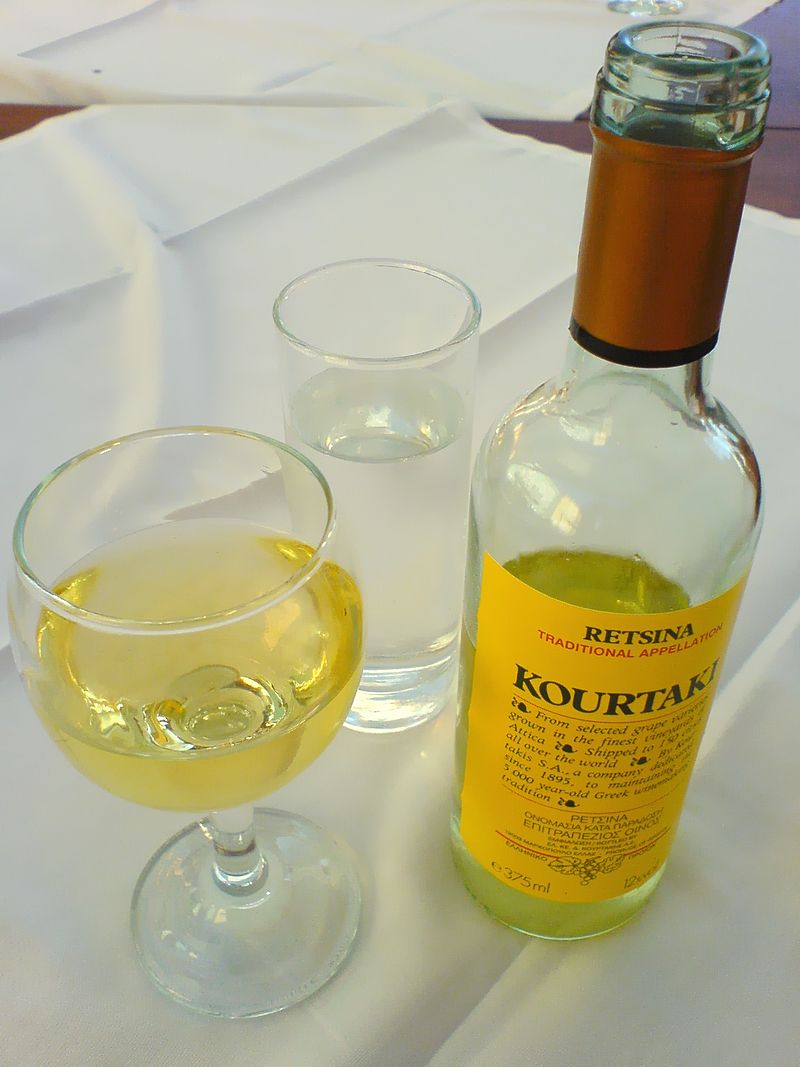
Retrieved from:https://pl.wikipedia.org/wiki/Retsina#/media/Plik:Retsina.JPG
Most popular dishes
Horiatiki - Greek salad is one of the most popular salads in the world. Traditional feta cheese usually in one slice added to such banal ingredients as tomatoes, cucumbers, green peppers, red onion, plus a few black olives and generous portion of olive oil and spices
Tiropitakia - snack of all Greeks,to prepare these tasty triangles, filo dough is most often used and is crescent-shaped. Dumplings filled with feta cheese are baked in the oven and taste good both hot and cold.
Revithia - one of the few soups in Greek cuisine. Very filling and warming, served in winter. It is prepared only from chickpeas cooked in water with previously fried onions.
To sum up, these are basic information about Greek cuisine. Personally, I'm a big fan of feta cheese with fresh fruit. I haven't had the opportunity to try the well-known Greek dishes yet, but I would love to do it in the future.
And what do you think about Greek cuisine, do you like it? I am waiting for your comments
To sum up, these are basic information about Greek cuisine. Personally, I'm a big fan of feta cheese with fresh fruit. I haven't had the opportunity to try the well-known Greek dishes yet, but I would love to do it in the future.
And what do you think about Greek cuisine, do you like it? I am waiting for your comments
References:
- Hugh Johnson, Jancis Robinson: Wielki atlas świata win. Buchmann, 2008, s. 283. ISBN 978-83-7670-164-6.
- Roman Dawid Tauber, Olha Kovinko. Kuchnia grecka, Poznań 2013
- Sofia Skoura, Wielka kuchnia grecka, Wyd. Φυτρακη 2008.
- Stephen A. Vitale, Joseph L. Katz. Liquid Droplet Dispersions Formed by Homogeneous Liquid-Liquid Nucleation:
- The Ouzo Effect. „Langmuir”. 19 (10), s. 4105–4110, maj 2003. DOI: 10.1021/la026842o
Comments
Post a Comment